Why Is Tissue Assessment Important Before Arm Liposuction?
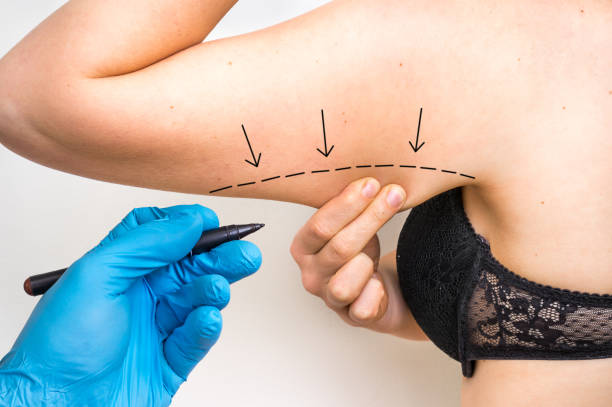
Beautifully sculpted arms begin with more than removing unwanted fat. They require an understanding of skin quality, fat distribution, tissue thickness, and the body's natural structure. Before planning arm liposuction, a detailed tissue assessment helps surgeons identify the most suitable approach to achieve refined contours while preserving natural proportions.
Every individual has a unique anatomical structure. Therefore, successful body contouring begins with examining the tissues beneath the skin and understanding how they will respond to the procedure. This clinical precision forms the foundation of a personalised surgical plan.
1. Understanding the Different Layers of Arm Tissue
The upper arm contains several interconnected tissue structures that influence its shape, definition, and overall appearance. Examining these layers allows surgeons to understand where excess volume is located and how the treatment should be approached.
The primary structures include:
Subcutaneous fat: Located beneath the skin, this layer contains the fat deposits targeted during liposuction.
Dermis: This skin layer contains collagen and elastin fibres responsible for structural strength and flexibility.
Connective tissue: Fibrous septa help organise fat compartments and provide structural support.
Muscle structure: The biceps and triceps contribute to the natural shape and definition of the upper arm.
Understanding these anatomical components helps surgeons distinguish localised fat deposits from fullness associated with other structural characteristics. This distinction supports more precise treatment planning.
2. Evaluating Skin Elasticity for Smoother Results
Skin elasticity is a major consideration when planning arm contouring. Following fat removal, the skin needs sufficient flexibility to adapt to the reduced underlying volume.
During consultation, surgeons examine skin recoil, thickness, texture, and existing laxity. They may gently stretch the skin to observe how effectively it returns to its original position.
Understanding skin elasticity helps establish realistic expectations and determine whether liposuction alone is appropriate.
Skin quality also provides valuable information about collagen support. Since collagen contributes to dermal strength, evaluating its structural characteristics helps surgeons select an approach that complements the patient's natural anatomy.
3. Mapping Fat Distribution Before Surgery
Fat distribution varies considerably between individuals. Some people develop fullness along the inner upper arms, while others have more noticeable deposits around the posterior or lateral regions.
A detailed anatomical examination helps identify these patterns and establish the treatment boundaries.
Surgeons typically evaluate:
Thickness and distribution of subcutaneous fat.
Symmetry between both upper arms.
Contours around the shoulder and elbow.
Natural muscle definition.
Areas requiring particularly delicate fat removal.
This mapping process helps create a balanced contour rather than simply reducing volume throughout the entire arm. The intention is to maintain natural transitions between surrounding anatomical areas.
4. Assessing Tissue Thickness and Structural Support
Tissue thickness influences the depth, direction, and distribution of fat removal. Surgeons examine the superficial and deeper fat compartments to understand how they contribute to the overall arm profile.
This assessment helps determine appropriate treatment depths and supports controlled cannula movement during surgery.
Particular attention is given to:
The thickness of individual fat compartments.
The organisation of fibrous connective tissue.
The relationship between skin coverage and fat volume.
Natural variations in tissue density.
These observations help surgeons plan a controlled procedure that respects the supporting structures beneath the skin.
5. Selecting Advanced Liposuction Technologies
Modern body contouring incorporates specialised surgical instruments and energy based technologies to support precise fat removal. The choice depends on tissue characteristics, anatomical requirements, and the surgeon's clinical judgement.
Suction Assisted Liposuction
This established technique uses specialised cannulas connected to a surgical suction system. The surgeon carefully guides the instrument through targeted fat compartments to extract unwanted fat.
Cannula diameter, tip design, insertion depth, and movement patterns all influence the precision of fat removal.
VASER Ultrasound Assisted Liposuction
VASER technology uses ultrasound energy to help separate fat cells before extraction. Its selective approach can support detailed contouring in appropriately selected patients.
Power Assisted Liposuction
Power assisted systems use mechanically oscillating cannulas to facilitate fat extraction. This technology offers surgeons an additional level of instrument control when working with different tissue characteristics.
Radiofrequency Assisted Body Contouring
Radiofrequency technologies deliver controlled energy beneath the skin to encourage collagen remodelling and tissue contraction. Their potential application depends on individual requirements and clinical suitability.
These technologies serve different purposes. A comprehensive tissue assessment helps determine which approach is appropriate for achieving the desired contour.
6. Understanding the Relationship Between Skin and Fat
One of the most important aspects of preoperative evaluation is understanding how the skin envelope relates to the underlying fat layer.
Surgeons assess whether the skin has sufficient elasticity to accommodate the planned reduction in volume. They also examine collagen support, tissue thickness, and the distribution of existing laxity.
This relationship helps determine whether liposuction alone is suitable or whether an additional skin tightening procedure should be considered.
For selected patients, complementary treatments such as radiofrequency based skin tightening may form part of a broader contouring strategy.
The objective is to create harmonious proportions while maintaining the natural appearance of the upper arms.
7. Planning Symmetry and Natural Arm Proportions
Although both arms may appear similar, their anatomical characteristics can differ subtly. Variations in fat distribution, muscle development, and skin thickness influence individual contours.
Surgeons compare both arms during the preoperative examination and identify areas that require different levels of attention.
Standardised clinical photography and precise preoperative skin markings help document treatment areas and guide surgical planning.
Attention also extends to the shoulders, elbows, and surrounding contours. This comprehensive perspective helps ensure that the refined arms complement the individual's overall physique.
8. Developing a Personalised Surgical Plan
A detailed tissue assessment brings together all the clinical observations required to create an individualised treatment strategy.
During consultation, the surgeon reviews medical history, examines the treatment area, understands aesthetic expectations, and evaluates suitability for the procedure.
Important considerations include:
Existing fat volume and distribution.
Skin elasticity and tissue quality.
General health and medical history.
Previous procedures and relevant medications.
Desired contour and realistic treatment expectations.
At Aesthetic Polyclinic, treatment planning is guided by individual anatomical requirements and professional clinical evaluation. Specialised cannulas, surgical suction equipment, and appropriate contouring techniques are considered according to the patient's needs.
Discover the Science Behind Beautifully Sculpted Arms
Established in 2000, Aesthetic Polyclinic is one of Dubai's leading centres for advanced aesthetic care, offering comprehensive services in Plastic Surgery, Dermatology, Dentistry, Hair Removal, Slimming, and Specialized Skin Care. Originally founded as one of the UAE's first medical spas, it has evolved into a state of the art facility combining advanced medical technology with personalised care. Its experienced doctors, dermatologists, and image consultants are dedicated to enhancing natural beauty and self-confidence through tailored treatment plans. Discover the expertise of an established aesthetic clinic guided by quality, innovation, and the philosophy of achieving natural results: You, just better. Together in health, beauty, and confidence, Aesthetic Polyclinic Dubai continues to redefine aesthetic excellence across the UAE.
Frequently Asked Questions
1. Can tissue assessment influence how much fat is removed?
Yes. Evaluating fat thickness, skin elasticity, and anatomical structure helps surgeons determine an appropriate amount of fat removal while maintaining balanced proportions.
2. Why is skin elasticity important before arm liposuction?
Skin elasticity influences how the skin may adapt after fat removal. Assessing its flexibility and structural quality helps surgeons develop a suitable treatment plan.
3. Does everyone require advanced liposuction technology?
Not necessarily. The appropriate technique depends on individual anatomy, tissue characteristics, and surgical objectives. An experienced surgeon determines the most suitable technology following a detailed assessment.


Comments
Post a Comment